
EMI vs Affordability: What Should You Check First?
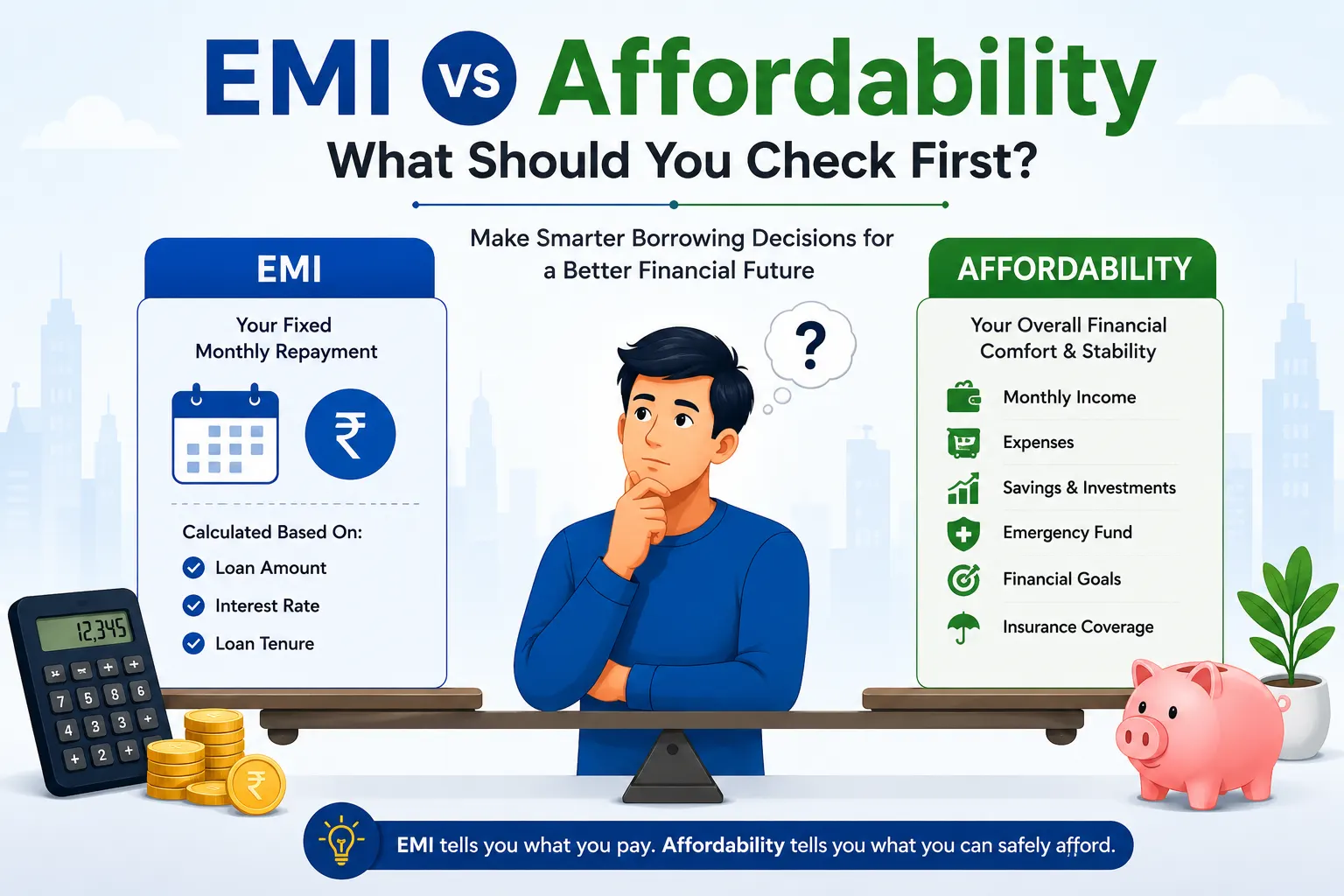
Calculating EMI is easy. Understanding whether you can truly afford that EMI without hurting your future financial stability is what actually matters.
A loan is affordable only when it fits comfortably into your complete financial life.
Most Borrowers Check EMI First — But That Is Often a Mistake
Many people decide their loan based only on whether they can pay the EMI next month. But affordability is much deeper than a single monthly payment.
A loan may appear affordable today while slowly damaging your savings, investments, emergency planning, and financial flexibility over the next several years.
Affordability tells you whether paying it is financially healthy.
What Is EMI?
EMI, or Equated Monthly Installment, is the fixed monthly amount you pay toward a loan. It includes both principal repayment and interest.
EMI calculations are useful because they help borrowers estimate repayment obligations before taking a loan.
| Loan Factor | Effect on EMI |
|---|---|
| Higher Loan Amount | Higher EMI |
| Higher Interest Rate | Higher EMI |
| Longer Tenure | Lower EMI |
| Shorter Tenure | Higher EMI |
But EMI calculation alone does not tell whether the loan is actually safe for your long-term financial health.
What Is Affordability?
Affordability measures whether your financial life can comfortably support the loan while still allowing room for:
- Emergency savings
- Monthly investments
- Insurance protection
- Lifestyle expenses
- Future goals
- Unexpected emergencies
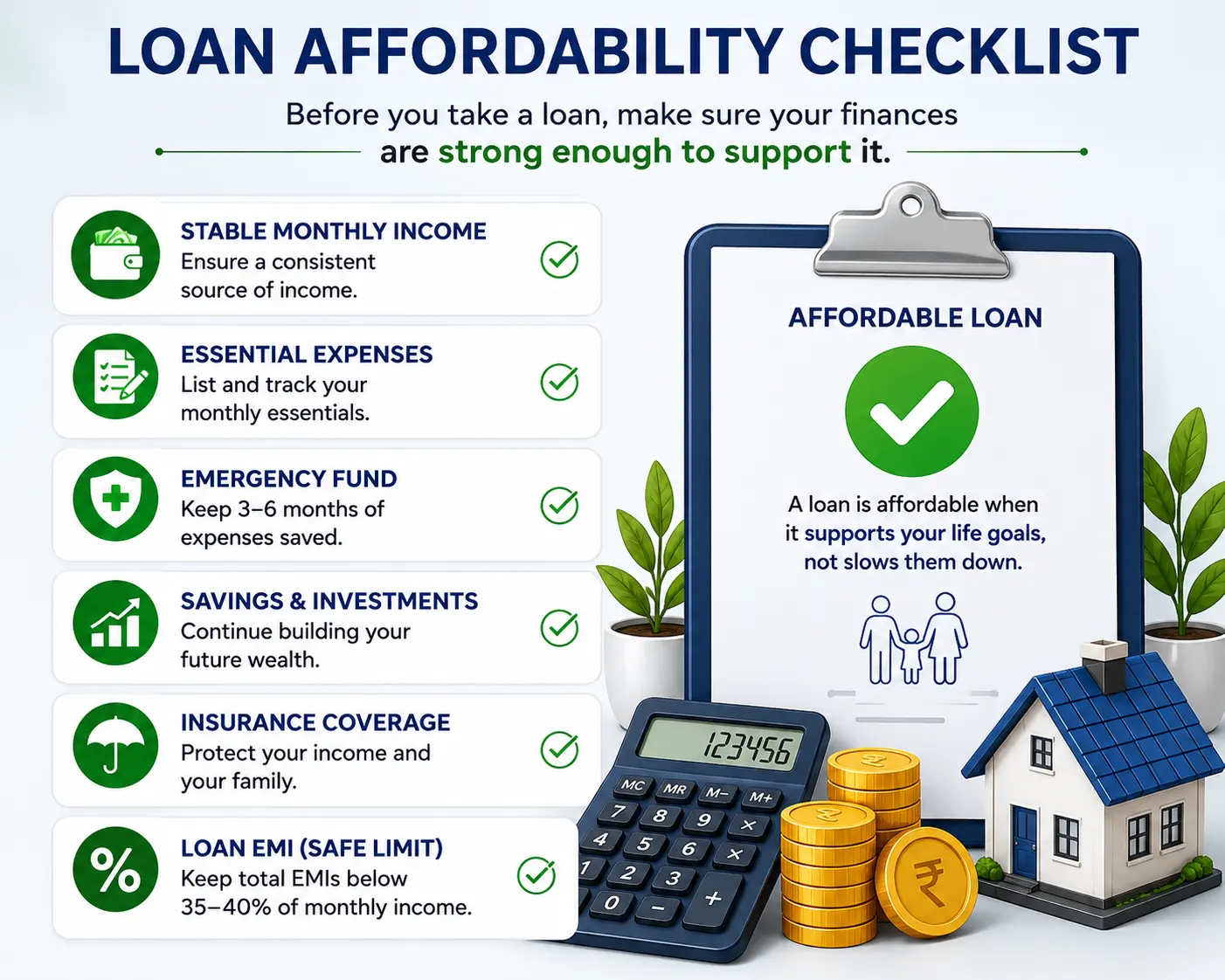
A borrower may technically qualify for a loan from a bank but still struggle financially because the EMI consumes too much monthly income.
Why Affordability Matters More Than EMI
Only Checking EMI
“Can I somehow pay this EMI every month?”
Checking Affordability
“Can I comfortably manage this EMI while still building savings and financial security?”
This mindset difference completely changes borrowing quality.
The Safe EMI Rule Most Borrowers Ignore
Financial planners commonly recommend keeping total EMIs below 35% to 40% of monthly income.
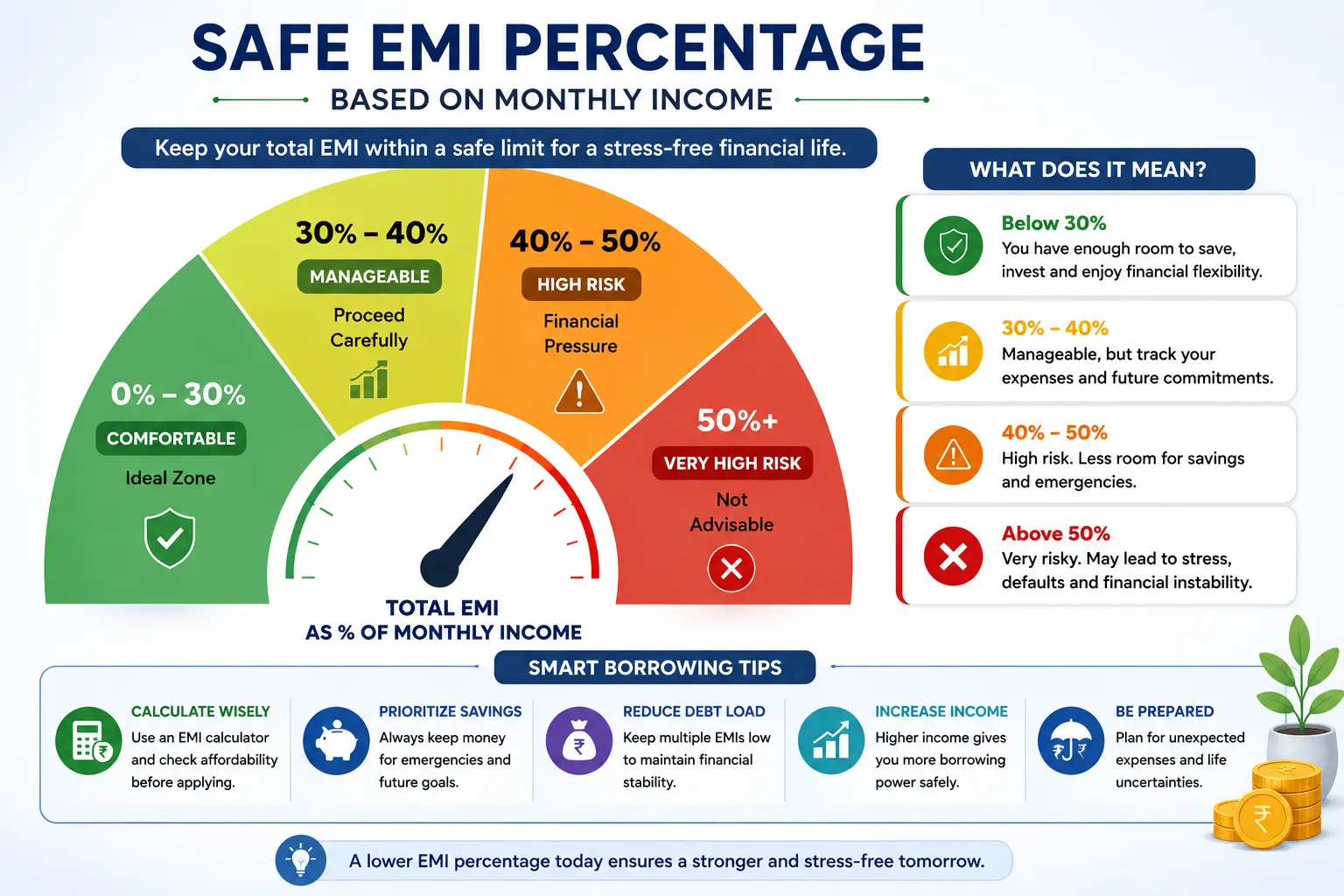
| EMI Percentage of Income | Financial Condition |
|---|---|
| Below 30% | Comfortable |
| 30% – 40% | Manageable |
| 40% – 50% | Financial pressure risk |
| Above 50% | High stress zone |
The higher your EMI ratio becomes, the less flexibility your budget has during emergencies or income disruptions.
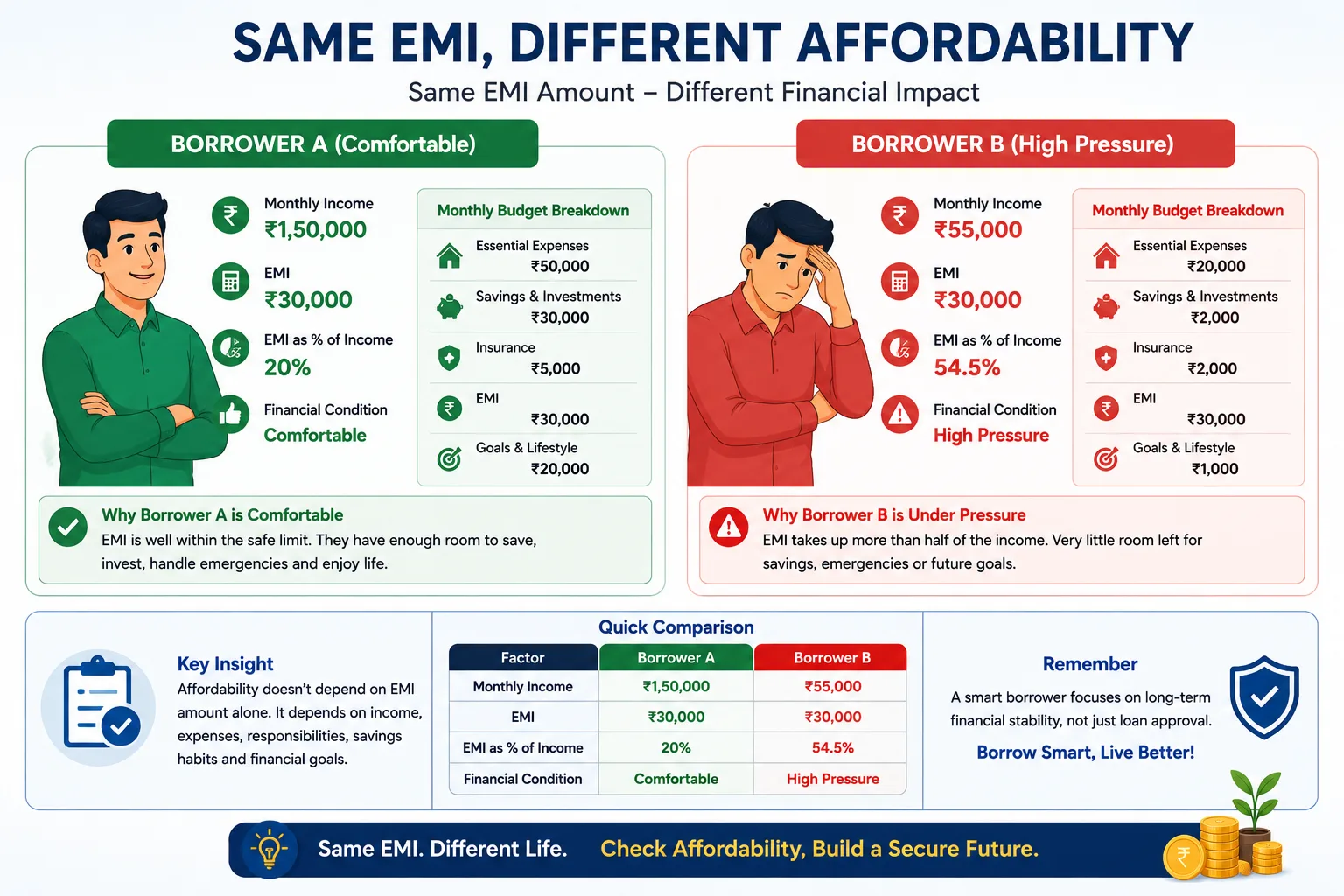
Real Example: EMI Can Be Affordable for One Person but Dangerous for Another
| Borrower | Income | EMI | Situation |
|---|---|---|---|
| Person A | ₹1,50,000 | ₹30,000 | Comfortable |
| Person B | ₹55,000 | ₹30,000 | High pressure |
The EMI amount is identical. But affordability changes completely because income, savings, responsibilities, and lifestyle are different.
Hidden Costs Borrowers Forget While Checking EMI
Many borrowers calculate only the EMI and ignore additional financial obligations.
- Insurance premiums
- Fuel and transportation expenses
- Medical emergencies
- School or family expenses
- Annual maintenance costs
- Investment commitments
- Inflation impact
Ignoring these costs creates a false sense of affordability.
Psychological Impact of Poor Affordability
Financial stress is not created by debt alone. It is created when borrowers lose monthly breathing space.
Poor affordability often affects:
- Mental peace
- Career flexibility
- Savings discipline
- Family planning
- Investment growth
- Emergency preparedness
How to Check Loan Affordability Properly
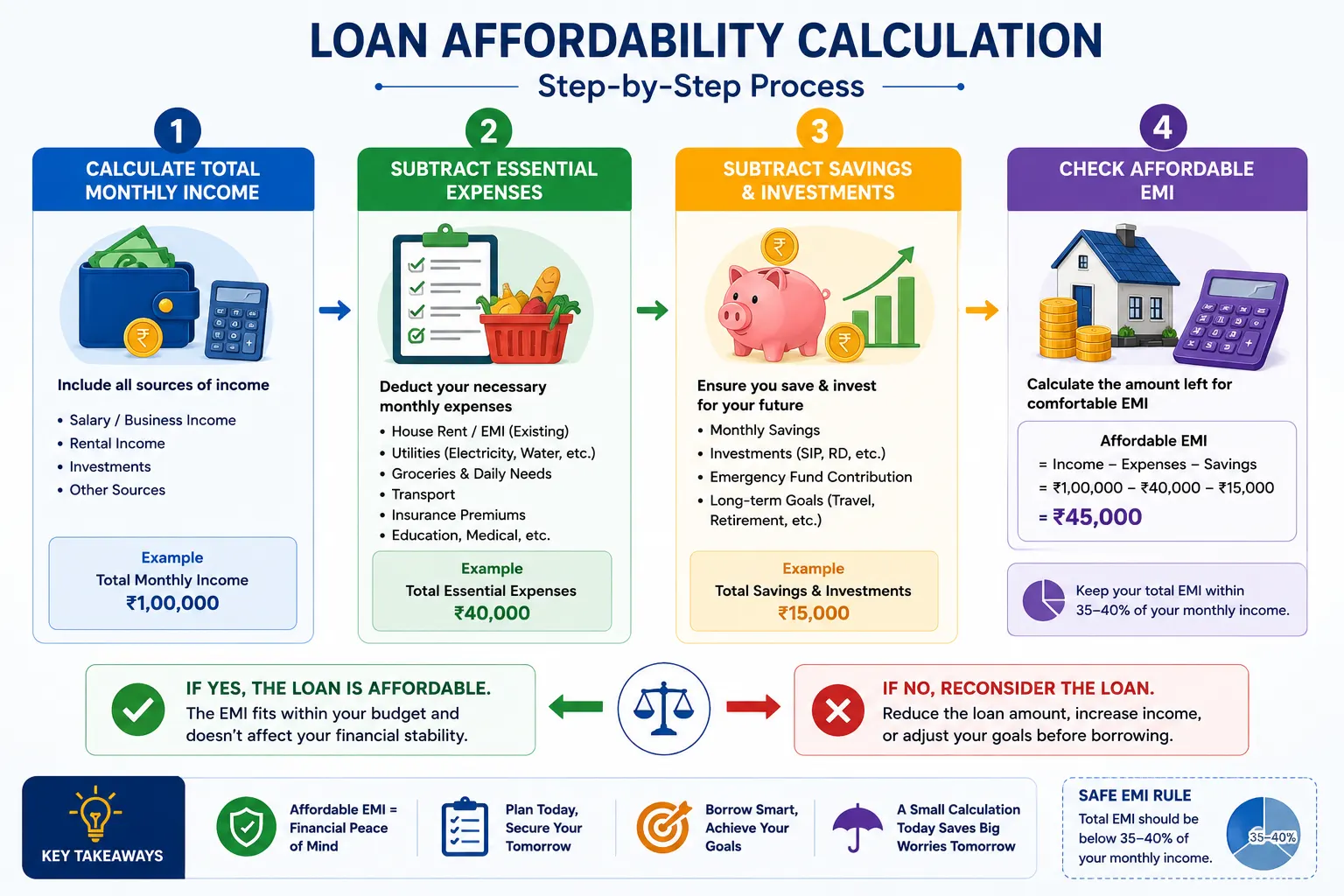
This approach is far safer than borrowing based only on maximum eligibility offered by lenders.
When EMI Is More Important Than Affordability
There are situations where lowering EMI becomes temporarily important:
- Job transitions
- Medical emergencies
- Short-term income reduction
- Temporary business cash flow issues
But even in these situations, affordability should remain the long-term goal.
FAQs
What is the difference between EMI and affordability?
EMI is the monthly loan payment. Affordability measures whether paying that EMI is financially healthy for your overall life.
Can banks approve unaffordable loans?
Yes. Loan eligibility does not always guarantee financial comfort or long-term affordability.
What is a safe EMI percentage of salary?
Many financial planners recommend keeping total EMIs below 35% to 40% of monthly income.
Why do borrowers face stress even after EMI approval?
Because approval focuses mainly on repayment ability, while affordability focuses on overall financial stability.
Final Thoughts
EMI calculations help you understand repayment obligations. Affordability helps you protect your financial future.
The smartest borrowers do not ask:
They ask:
That single mindset shift can completely transform your financial life.